

Uplevel your SOX Program and Career in 2026
The SOX Accelerator Program provides a comprehensive blueprint for building, managing, and maintaining a modern Sarbanes-Oxley program, and arms you with the technical skills and strategies to become a SOX Leader and make more money.


Presentations from leading SOX experts and practitioners on the key aspects of a modern SOX program and career.

Facilitated, roundtable discussions with no more than 15 cohort members each that emphasize and review the prior week’s key takeaways, understand how these situations occur in your peers’ organizations, and opportunities to practice key conversations to be had with your team, CFO, Audit Committee and External Auditor.

A blend of technical instruction, key stakeholder perspectives, and leadership development.

An opportunity to develop relationships with your peers that you can maintain for your professional career.

16 NASBA certified CPE credits.

Straightforward, “How-to” Training. The SOX Accelerator Program is focused on providing actionable tactics and strategies across 9 expert-led presentations, 7 cohort roundtable discussions, and up to 16 hours of CPE credits.
The SOX Accelerator Program Classes and Leaders
Register for The Sox AcceleratorThe SOX Accelerator Program Introduction

Description
This introductory session will introduce cohort members to the Program, and to suggest practices to get the most out of the course. An overview will include the current landscape of SOX compliance, SOX teams, and how current and rising SOX and Internal Audit professionals can improve their careers through documented plans of action and focused intent.
Learning Objectives
Introduction to The SOX Accelerator Program
Current state and pain points of SOX Compliance
Preparing to get the most out of The SOX Accelerator Program

Tom is the Founder of the Internal Audit Collective, where he helps Internal Audit and SOX professionals to obtain the knowledge and experience to help their companies succeed, and for the individual to advance their career and earn more money.
Prior to the Internal Audit Collective, Tom was one of the first 40 employees at AuditBoard, where he worked with more than 750 internal audit and SOX teams, and 1k+ internal auditors on their internal audit strategies, processes, and technologies.
Prior to AuditBoard, Tom was a Chief Audit Executive at Analog Devices, and former EY Risk Advisory Manager.
Additional Details
The SOX Top-down Risk Assessment and Rationalizing Controls
Description
Do you ever wonder why certain internal controls are in-scope for SOX compliance, or how that determination is made? The focus of this presentation is to provide a step-by-step approach to performing the SOX top-risk assessment, and to share perspectives on areas that are most common for controls rationalization.
Learning Objectives
“How to” perform a SOX Risk Assessment to ensure that only the right key controls are performed and tested
Scoping considerations for multiple in-scope entities (full vs. limited scope)
Most common areas to reduce and rationalize controls
Entity-level controls considerations
Factors involved with Fraud and other risk assessments

Adda Grace Power, CISA, currently serves as the Senior Director and Head of Internal Audit at Dropbox, a position held since May 2022.
Prior to this role, Adda Grace Power spent nearly a decade at TripAdvisor, progressing from Director of SOX & Internal Audit to Senior Director, where responsibilities included establishing an internal audit department managing global operational, financial, Sarbanes-Oxley audits, and PCI DSS compliance.
Previous experience includes roles at Deloitte & Touche, focusing on various industries and internal control processes, as well as positions in consulting and residence life at the University of Massachusetts, Lowell.
Adda Grace Power holds a Bachelor's degree in Accounting from the University of Massachusetts, Lowell, completed in 2006.
Additional Details
Taking More Control of your SOX Controls
Description
This session will teach and train cohort members how to take more ownership and control of what controls their organization should, and shouldn’t, be testing for their SOX compliance program. The meeting will discuss key takeaways from the prior week’s session on performing the top-down risk assessment and how to rationalize SOX controls.
Learning Objectives
Walkthrough steps needed to determine what controls should be key for SOX compliance
Identify common areas and processes where too many controls exist
Practice supporting why controls were eliminated for External Auditor buy-in
.jpg)
Internal audit professional with experience in risk-based, financial, and operational audits across a variety of industries. I have deep expertise in managing SOX programs and related control testing and have experience building an internal audit function as well as working in large, established teams.
Additional Details
Contemporary Considerations for Managing and Testing ITGCs
Description
This session is designed to provide non IT SOX auditors with a deeper understanding of managing IT SOX through discussion of IT SOX and Application control frameworks, how to determine what ITGCs are needed, and when and how to harmonize IT controls to reduce testing.
Learning Objectives
Defining and understanding IT SOX landscape
Scoping and rationalizing systems and IT general and application controls
ITGC testing best practices and considerations

Matt Weise is a seasoned cybersecurity and compliance professional with over 15 years of experience in information security, regulatory compliance, and IT governance.
Currently serving as a Lead Director in Cybersecurity Compliance at a large Fortune 50 company, he oversees a team responsible for managing a broad range of cybersecurity assessments, including SOX, HIPAA, NIST 800-53, NIST CSF, and various state-specific regulations. With a deep understanding of regulatory frameworks and internal audit processes, Matt has led initiatives that ensure robust IT General Controls (ITGC) and alignment with industry standards.
He is a Certified Public Accountant (CPA) and a Certified Information Systems Auditor (CISA), and has a proven track record of driving compliance programs that protect organizations from evolving threats while maintaining operational efficiency.
Additional Details
Real-world Scenarios Managing an IT SOX Compliance Program
Description
This focus of this facilitated discussion is to dive deeper into the prior week’s talking points and share perspectives on contemporary approaches to managing an IT controls environment. Discussion points will include the impact of changes to an organization’s tech stack on ITGCs, external technology changes impacts, and root causes to why IT Controls are deficient.
Learning Objectives
Common ITGC focus areas of external auditors
How to leverage scoping templates to ensure your control environment is right-sized for your organization
ITGC and application controls most prone to being deficient

Internal audit professional with experience in risk-based, financial, and operational audits across a variety of industries. I have deep expertise in managing SOX programs and related control testing and have experience building an internal audit function as well as working in large, established teams.
Additional Details
From Reports to Reliance: Leading Practices for IUC
Description
Information Used in a Control (IUC) is a foundational element of effective control design, particularly for management review and automated controls relied upon by Internal Audit and external auditors. This session focuses on leading practices CAEs and Audit Directors need to understand to ensure IUC is reliable, well-governed, and scalable. Participants will explore key IUC risk considerations, auditor expectations, and how a risk-based approach to testing, benchmarking, and technology can reduce friction while maintaining control quality.
Learning Objectives
Articulate what CAEs and Audit Directors need to know about IUC and its role in control effectiveness
Identify leading practices for governing and standardizing IUC across the organization
Identify leading practices for governing and standardizing IUC across the organization
Describe auditor expectations and documentation standards for IUC
Apply a risk-based approach to benchmarking, testing, and leveraging technology for IUC

Natalie Metaxas is a results-driven leader and is currently the Head of Internal Audit at SunbeltRentals, the second-largest provider of rental equipment in the world. Since joining SunbeltRentals in October 2023, Natalie has been instrumental in developing and implementing arobust internal audit function that delivers independent and objective assurance, adding valueand supporting compliance with laws, regulations, and internal policies.
With nearly 20 years of experience in accounting and auditing, Natalie specializes inestablishing and revitalizing Internal Audit functions. Prior to her current role, she served as theHead of Internal Audit for XPO Logistics and its spin-off entity, GXO Logistics. After successfullysetting up the GXO Internal Audit function, she returned to XPO to assist with the Head of SOXCompliance role, later transitioning to RXO, where she continued to support SOX Compliancebefore joining Sunbelt Rentals.
Natalie is a Certified Public Accountant (CPA) and a Certified Compliance and EthicsProfessional (CCEP) with a Master's degree in Accounting from UNC Charlotte. Activelyserving as the VP/Academic Relations for the Charlotte Chapter of the Institute of InternalAuditors (IIA), Natalie is dedicated to advancing the field of IA and will serve as in 2025.
Additional Details
Unlocking More Value from IUC
Description
This facilitated discussion will give Cohort members the opportunity to share key takeaways from the prior week’s session and deepen the understanding of IUC and explore challenges in standardizing IUC practices, addressing data integrity risks, and leveraging technology where applicable.
Learning Objectives
Understand how to evaluate the maturity of your organization’s IUC practices.
Identify strategies to align management’s IUC practices with internal and external audit testing expectations.
Identify potential technology-based solutions to improve IUC quality and control effectiveness
Internal audit professional with experience in risk-based, financial, and operational audits across a variety of industries. I have deep expertise in managing SOX programs and related control testing and have experience building an internal audit function as well as working in large, established teams.
Additional Details
Improving on your External Auditor Reliance Strategy and Relationship
Description
This session explores the strategic drivers of auditor reliance, including the importance of objectivity, competency, and rigorous methodology. It outlines practical strategies for alignment, such as performing joint walkthroughs and leveraging shared sample sets to reduce the burden on control owners. Furthermore, the presentation offers a roadmap for effective communication, conflict resolution, and long-term relationship management to ensure a smooth, "no surprises" audit cycle.
Learning Objectives
Develop a Reliance Strategy for SOX Testing: Identify the key factors that drive EA reliance—such as independence and documentation standards—and apply strategies to align on scope, timing, and methodology early in the audit cycle.
Evaluate and Select High-Value Controls for Reliance: Categorize which controls are best suited for EA reliance (e.g., simple, repeatable, low-judgment manual controls) versus those that are not, in order to maximize cost savings and team efficiency.
Implement Effective Communication and Conflict Management Protocols: Execute a "no surprises" communication plan that engages senior leadership and uses specific "Do/Don't" techniques to resolve professional disagreements with the EA without damaging the partnership.

With over a decade of experience in internal and external audit services, Dave currently serves as the Director of Internal Audit at Rocket Companies. In this role, Dave supports both the Sarbanes-Oxley (SOX) compliance audit, and IT focused Internal Audits.
Prior to joining Rocket Companies, Dave spent nearly a decade at Deloitte & Touche LLP, where he rose to the position of Manager in Risk & Financial Advisory. During this time, Dave led numerous teams of various sizes in conducting comprehensive audits, provided insightful recommendations to improve business processes, and provided services to over 30+ companies.
Dave is recognized as a subject matter expert in SOX compliance and has extensive experience across various industries, including banking, retail, fintech, and automotive. He has a proven track record of leading successful system implementation reviews and developing risk control matrices to enhance IT control environments.
In addition to his technical expertise, Dave is a dedicated leader and mentor, known for cultivating strong relationships with business leaders and empowering his team to achieve excellence.
Additional Details
Building Trust with External Auditors
Description
This facilitated discussion will give Cohort members the opportunity to share key takeaways from the prior week’s session and explore practical methods to improve relationships and reliance with external auditors.
Additionally, Cohort members will share best practices on addressing barriers to collaboration, identifying leading practices for effective relationships, and improving overall efficiency of SOX program management.
Learning Objectives
Understand how to apply audit reliance strategy concepts to identify where increasing external audit reliance can be most impactful
Evaluate common collaboration challenges between internal and external auditors and develop approaches to overcome them through proactive communication and alignment.
Identify specific action items to strengthen external audit reliance during the planning, documentation, and testing phases of the SOX program.
Internal audit professional with experience in risk-based, financial, and operational audits across a variety of industries. I have deep expertise in managing SOX programs and related control testing and have experience building an internal audit function as well as working in large, established teams.
Additional Details
Automation and Analytics of a Contemporary SOX Program
Description
The use of technology for SOX compliance has increased exponentially in a matter of years. The session will highlight the advancements in the technology applications used for SOX compliance - including applications to centralize your SOX program, considerations on when and where to use data analytics, and how to use Generative AI to continue to minimize and eliminate time spent on non-value added activities in your SOX program.
Learning Objectives
How to better use a purpose-built application for SOX compliance
Current and future Gen AI use cases
Setting and successfully rolling out a SOX data analytics program
Examples of analytics for more efficient sample selection and controls testing
Automating SOX tasks and controls (data collection, control performance)

Trent Russell is the Founder of Greenskies Analytics. At Greenskies, Trent develops audit analytics strategies, helps internal audit teams launch their data analytics initiatives, makes the analytics initiatives actually work, and moves internal audit teams up the analytics maturity model.
Prior to founding Greenskies Analytics, he served multiple industries in EY’s IT Risk Assurance practice. He later joined the Financial Service Office at EY and facilitated the development of data analytics procedures. Trent later led the audit analytics function for a higher ed and healthcare provider.
In addition to serving his clients, Trent hosts The Audit Podcast and facilitates quarterly audit analytics roundtables.
Additional Details
Improving the use of technology in your SOX compliance program.
Description
Many internal audit and internal controls teams spend a significant amount of money on technology for their SOX program, but have barely scratched the surface on recognizing value and an ROI for their spend. This session will solicit and share feedback on the applications, features, and use cases best used to drive efficiencies in your SOX program.
Learning Objectives
GRC features to use to improve the control owner’s working experience
What processes and controls best leverage data analytic capabilities
Hearing of recent and new Generative AI use cases for SOX compliance
Understanding what parties outside of the SOX team need to be involved to leverage technology to its fullest capacity
Internal audit professional with experience in risk-based, financial, and operational audits across a variety of industries. I have deep expertise in managing SOX programs and related control testing and have experience building an internal audit function as well as working in large, established teams.
Additional Details
From SOX Manager to Business Leader
Description
Being a great auditor and audit leader is one part of the puzzle. The other? Navigating the corporate environment in a way that best positions you for future opportunities and growth. Learn to get out of your own way and start seeing the recognition and progression you deserve with these secrets of the career game.
Learning Objectives
Establishing executive presence and improving executive communications
Building your personal brand
Ways to navigate the corporate bureaucracy of a public company

As the founder of That Career Coach, Kendall Berg helps her clients and followers understand how to find progression, recognition, and support in their careers. She has been featured in Newsweek, US News and World Report, and Business Insider sharing her tips and advice. She also regularly supports her more than 500K followers across Instagram, TikTok, and YouTube with her take on playing the corporate game.
Prior to starting her company, Kendall worked with and for some of the largest companies in the world including Capital One, JP Morgan Chase, Samsung, and AT&T. In her role as a Director of Technology Strategy with these companies she has led strategic initiatives and culture programs geared towards career progression supporting 100s of thousands of employees. Over the course of her career, she has spoken to peer audiences of more than 1000 people and traveled the country sharing her advice with clients and corporations alike.
Kendall’s “That Career Coach” social media and podcast provides insights on corporate behind the scenes, recommendations on how to advocate for yourself and progress your career, and advice for navigating difficult interpersonal situations.
Additional Details
Raising your Prominence as a Business Leader
Description
There is a reason why many prominent business leaders, including those leading SOX functions, may not be the most technically savvy or proficient. It’s because they’ve mastered the art of working with people, establishing a great personal brand, and developing a reputation as a future business leader. This session will explore best practices successfully used to uplevel your reputation as a leader in your organization, and role-play situations where leadership may be most needed in your SOX program.
Learning Objectives
Techniques to build your personal brand as a SOX Leader and your business reputation as a trusted risk advisor
Identity situations where changes in communication style are most warranted
Strategies to leverage to improve the chances of getting what you need to uplevel your SOX program and career
Internal audit professional with experience in risk-based, financial, and operational audits across a variety of industries. I have deep expertise in managing SOX programs and related control testing and have experience building an internal audit function as well as working in large, established teams.
Additional Details
External Auditor and Audit Committee Chair Perspectives - A Fireside Chat
Description
Listen and participate in a 1:1 interview with a former external audit partner and current Audit Committee chair for actual perspectives and insights on how the SOX team, and its leader, can better partner with their external auditor and serve their Audit Committee.
Learning Objectives
External auditor and Audit Committee expectations of a SOX team and leader
Considerations when meeting Audit Committee during AC meetings, prep meetings, and the Executive Session
“What Good Looks Like” - the partnership of Internal Audit, External Audit, the CFO, and Audit Committee

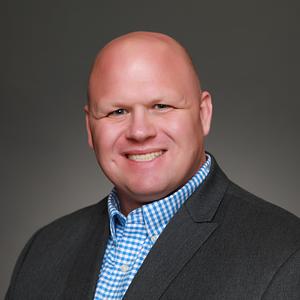
George Neble is currently the chair of the audit committee and member of the Board of Directors of Intapp, Inc (Nasdaq-INTA) and Everquote (Nasdaq-EVER) and serves on the board of directors of various privately held companies along with a number of non-profit organizations.
In addition, Neble has over 40 years of accounting and auditing experience working with public and private companies , primarily in the technology industry along with other commercial entities.
From 2012 to 2017, Neble served as the Northeast Market Leader and Managing Partner of the Boston office of EY after serving there as a senior Assurance partner for the previous 10 years. Neble was also an Assurance partner at Arthur Andersen in a career that spanned from 1978-2002.
He is a certified public accountant with extensive experience in accounting, SEC and financial reporting matters. Neble received a bachelor's degree in Accounting from Boston College in 1978.
Additional Details
Managing the Modern, Strategic SOX Program
Description
The most important part of a SOX program’s success is not how fast they test controls, or how few ICFR they have. It’s the SOX Leader’s ability to manage key relationships and to use the SOX program to elevate their organization’s approach to enterprise risk management. This session will share best practices on working with external auditors, senior leaders, SOX customers, and discuss strategies to drive positive change in your business.
Learning Objectives
The SOX Leader’s relationship with the External Auditor
Direct and indirect reliance strategies to ease the external auditor’s work
Educating and advocating to improve the the culture of controls compliance
Using SOX as a foundation for internal audit and risk management success
Additional Details
Raising your Prominence as a Business Leader
Description
This final session of the SOX Accelerator Program will build upon strategies shared in the prior week’s session and identify additional practices to transition your SOX Program from mediocre to world-class by implementing training programs for control owners, being seen as an advocate for SOX Compliance in your organization, and ways to expand upon your SOX responsibilities to other needed risk efforts.
Learning Objectives
Share best practices partnering with your External Auditor
Learn how to improve the experience of performing controls for control owners
Explore opportunities to expand SOX work to lead your organization’s Connected Risk Strategy and approach
Make the most out of lessons learned in the SOX Accelerator Program
Internal audit professional with experience in risk-based, financial, and operational audits across a variety of industries. I have deep expertise in managing SOX programs and related control testing and have experience building an internal audit function as well as working in large, established teams.
Additional Details
What World-Class SOX and Internal Audit Leaders are Saying about The SOX Accelerator Program
Register for The Sox AcceleratorHow The SOX Accelerator Program Works
Register for The Sox Accelerator
length

schedule

Timing
every Wednesday

Duration

Starts
.svg)
Ends
MORE than just one-hour presentations
The course was built with bonus resources to not only provide the training, but help you change the way you work.
The SOX Accelerator Program Syllabus
Includes copies of meeting presentations, optional and recommended pre-readings, cohort discussion talking points, and additional resources to help uplevel your SOX knowledge and career.
12-month Access to the Internal Audit Collective Community
An online, managed Slack community for all cohort members to continue to build relationships and network, and to share best practices and templates on SOX compliance, Internal Audit, and other risk management initiatives with others who are part of the broader IAC community.
The SOX Accelerator Program is not for everyone
Register for The Sox AcceleratorYou are a good fit for this course if:
You’ve never received formal training on the technical aspects of SOX compliance
You understand that this program is an asset and a tool, and you’ll need to use it
You are open and flexible to new ideas, and that there is not one “right” or “wrong” approach to managing a SOX program
You recognize that a large part of success involves not only your strategies, but having a network of like-minded individuals to share perspective with and learn from
You’re willing to reach out and get the help you need when you get stuck
You are not a good fit for this course if:
You are not respectful, or quickly dismissive of new ideas or perspectives of your peers
You are looking to only learn, and not share your thoughts and converse with your peers when opportunities arise to do so
You are just looking to get CPEs
You are expecting The SOX Accelerator Program to be technical manual to test and document controls or how to use GRC applications
Register for
The SOX Accelerator
Practical, cohort-based training to lead a modern SOX Program
16 NASBA-accredited CPEs
1-year membership to the Internal Audit Collective community
9 expert-led presentations
7 peer roundtable conversations
Syllabus with all shared presentations and templates
Frequently Asked Questions
Who is this course for?
The SOX Accelerator Program was built for:
- Current SOX program leaders (on the 2nd or 3rd line) who are seeking new ways to continuously improve their organization’s SOX Program.
- Rising SOX Leaders (ExperiencedManagers, Senior Managers, and Directors) who aspire to lead their own SOX department one day, either at their current company or another, or take on a role that directly reports to an Internal Controls leader.
- SOX practitioners (Staff, Seniors, and Managers) who were not trained formally on SOX Compliance in a consulting firm and do not have access to SOX-specific training in their own company.
The program content is as useful to pre-IPO SOX leaders as it is to those leading SOX efforts of the Fortune 100.
And while this program is focused on SOX Compliance, current or future Internal Control leaders of other functions (e.g. Model Audit Rule) will find that 90%+ of the course content relevant to them as well.
Who are you? And what is the Internal Audit Collective?
Hi - I’m Tom O’Reilly. I help internal audit and SOX professionals uplevel their programs and careers.You can read more about my backstory and why I built the Internal Audit Collective here.
And while this program is focused on SOX Compliance, current or future Internal Control leaders of other functions (e.g. Model Audit Rule) will find that 90%+ of the course content relevant to them as well.
What if I cannot attend all of the meetings?
You will receive CPE credits for all sessions that you attend.
You will receive a certificate of completion for participating in 80% of the meetings (13 total)
I don’t lead my SOX department - am I allowed to register?
Yes, attendance is open to anyone who is interested in upleveling their companies approach to SOX compliance.
Those that will likely benefit from the sessions the most will likely have at least four years of SOX experience.
OK - I’m sold. What happens after I pay for the course?
Once you are registered, you will receive a welcome email, which will include the program syllabus with meeting information and materials.
You will be asked to choose what breakout sessions you’d like to attend (7 total). You’ll then receive meeting invites.
What do I do if I have any additional questions?
Email me at: tom@InternalAuditCollective.com - and I’ll get back to you asap.