
Five Steps to an Effective User Access Review

User Access Reviews (UARs) are one of the most important identity governance controls in any cybersecurity program. They help prevent privilege creep, detect stale or risky accounts, and reduce the blast radius of a cyberattack. They are also among the most commonly mishandled controls in practice, flawed in both design and execution. Here is the five-step process I recommend to every security team, whether you are preparing for an external assessment, strengthening your Zero Trust model, or working through recurring IAM issues.
Step 1: Define the Review Scope Clearly
Every effective UAR starts with a well-defined scope. Identify all in-scope systems, such as critical business applications, infrastructure, cloud services, admin consoles, servers, and databases. Determine which roles and privilege levels matter most, and as a practical starting point, capture everything above read-only access. Engage application owners early in this process. Their input is essential for validating the scope and identifying the access points that pose the greatest risk.
Step 2: Pull Accurate, Complete User Listings
The integrity of a UAR depends entirely on the quality of the data behind it. Extract a complete population of users alongside their associated roles, and ensure the data reflects a true point-in-time snapshot. Reconcile your listings against HR systems to account for terminations, leaves of absence, and transfers. Always retain the query, timestamp, and source of every extracted listing as this protects the traceability and defensibility of the entire review. Also, remember that the query itself needs to be reviewed to ensure no filters are applied that would suppress data.
Step 3: Validate Access Against Job Responsibilities
Once you have clean data, the real work begins. Confirm that each user still requires their current access based on the principle of least privilege. Look for excess entitlements, dormant accounts, and high-risk permissions. Flag administrative rights, privileged roles, and any segregation-of-duties conflicts. Application and system owners should lead the review itself, with additional input from each user's direct manager to ensure business context informs every decision.
Step 4: Document Reviewer Decisions and Evidence
Every approval or removal decision needs to be recorded with a clear reason code. Capture supporting evidence like screenshots, logs, or workflow approvals, and track exceptions, escalations, and privileged account decisions in a centralized log. Follow up on any vague or incomplete responses. If a user's access has been inappropriate for an extended period, a risk assessment and transaction-level lookback analysis are warranted to determine whether that access was misused.
Step 5: Remediate Quickly and Close the Loop
Identified issues should be remediated without delay. Remove unnecessary or risky access immediately, then validate and document the removal with before-and-after screenshots or logs. Record evidence of completion in your IAM or ticketing system. A UAR that identifies problems but fails to close them out cleanly is only half a control. The access should have been removed within the timeframe set by policy.
Final Thoughts
Periodic User Access Reviews do not have to be a painful, manual exercise. With the right workflow, clear accountability, and thoughtful automation, UARs become one of the strongest controls in your cybersecurity program, supporting Zero Trust, reducing insider threat exposure, and tightening identity governance across the enterprise.

Recent Articles

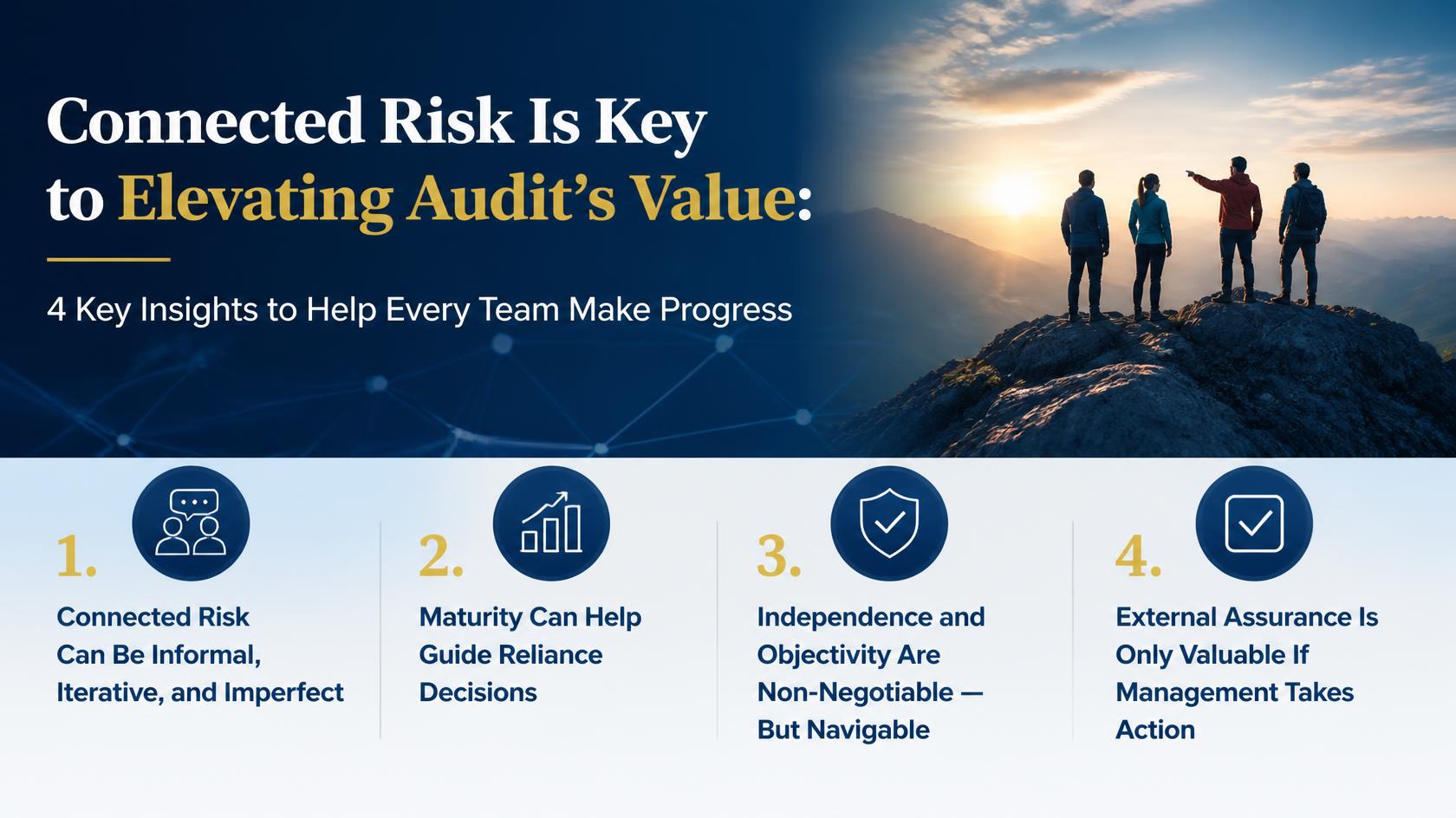
Connected Risk Is Key to Elevating Audit’s Value: 4 Key Insights to Help Every Team Make Progress

Want to be updated as new blog posts are released? Subscribe to our newsletter.
Join 1K+ readers of The Enabling Positive Change Newsletter for tips, strategies, and resources to improve your approach to Internal Audit and SOX compliance.